

Order Dispatcher for Service Businesses: Remote Coordination of Jobs in 2026
The role of an order dispatcher has evolved far beyond answering phone calls and passing messages to engineers. In 2026, service companies in plumbing, electrical work, appliance repair, cleaning, HVAC and field maintenance rely on remote dispatchers to manage job flow, optimise schedules and maintain consistent communication with both clients and technicians. With cloud-based CRM systems, GPS tracking and instant messaging tools, coordination no longer depends on being physically present in an office. Instead, it requires organisation, commercial awareness and the ability to make fast, informed decisions.
What an Order Dispatcher Actually Does in 2026
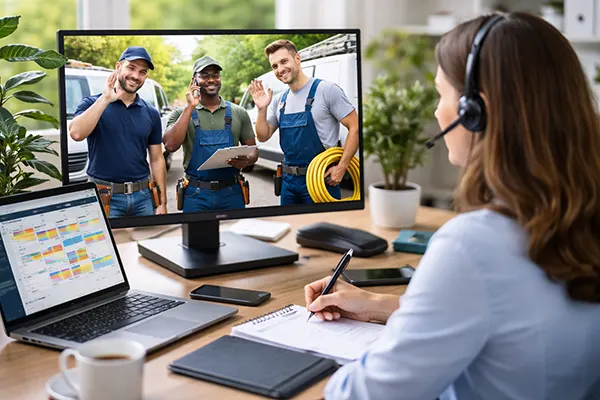
At its core, the dispatcher’s job is to receive incoming requests, assess their urgency and assign them to the right specialist. In practical terms, this means reviewing job descriptions, checking technician availability in real time and balancing workloads to avoid delays. Modern systems such as Jobber, ServiceTitan, Housecall Pro or Tradify allow dispatchers to see technician locations, skill sets and current assignments on a single dashboard.
Remote coordination also includes confirming appointment windows with customers, updating them if schedules shift and ensuring that technicians arrive with the necessary tools and parts. In competitive local markets, response time is critical. A dispatcher who reduces idle time between jobs can significantly increase daily revenue per technician.
In 2026, many dispatchers also monitor key performance indicators: average response time, job completion rate, cancellation percentage and customer feedback scores. This makes the role partially operational and partially analytical. It is no longer limited to clerical tasks; it directly influences profitability and customer retention.
Core Skills and Tools Required for Remote Coordination
Successful dispatchers combine communication skills with technical competence. Clear written English, confident phone communication and the ability to handle difficult conversations are essential. When customers are frustrated due to leaks, heating breakdowns or urgent repairs, the dispatcher becomes the first point of reassurance.
On the technical side, familiarity with scheduling software, CRM systems and basic spreadsheet reporting is expected. Many service companies now integrate payment processing, invoicing and route optimisation tools into one system. Understanding how these tools connect reduces administrative friction and errors.
Time management and prioritisation are equally important. Emergencies must be slotted in without disrupting the entire day’s plan. Dispatchers often apply structured prioritisation methods, distinguishing between urgent safety issues and routine maintenance calls, ensuring resources are allocated sensibly.
Income Potential and Business Models
Remote dispatching can be structured in several ways. Some professionals work as full-time employees for a single service company, earning a fixed monthly salary. In the UK market in 2026, remote dispatch coordinators typically earn between £24,000 and £35,000 annually, depending on sector complexity and working hours.
Others operate as independent contractors serving multiple small service businesses. For example, a dispatcher may manage bookings for three local trades companies simultaneously, charging each a monthly retainer or per-job coordination fee. This model increases earning potential while requiring strong organisation and clear service boundaries.
A third option involves building a small remote coordination agency. In this case, one experienced dispatcher trains assistants and offers structured scheduling, call handling and customer follow-up services to local contractors. With five to ten retained clients, monthly revenue can exceed that of traditional employment, provided systems are well organised.
How to Start Working as a Remote Dispatcher
Entry into this field does not require a formal university degree, but practical experience in administration, customer service or field operations is highly valuable. Many successful dispatchers began as office assistants in repair or installation companies before transitioning to remote work.
To begin, it is advisable to learn at least one industry-standard scheduling system. Many providers offer trial accounts or training modules. Demonstrating familiarity with job scheduling dashboards and route management tools makes candidates more attractive to employers.
Building credibility is crucial. A professional profile outlining previous coordination experience, references from contractors and clear availability hours increases trust. Since the role involves access to customer data and internal schedules, reliability and confidentiality are non-negotiable.
Operational Challenges and How to Manage Them
One of the main challenges in remote coordination is unpredictability. Technicians may face traffic delays, jobs may take longer than expected and emergency requests can disrupt a carefully planned schedule. A dispatcher must adapt quickly while keeping both customers and field staff informed.
Another challenge is communication overload. Handling phone calls, emails, instant messages and system notifications simultaneously requires structured workflows. Many professionals establish fixed communication channels, for example directing all urgent matters through one system while routine updates are handled via another.
Maintaining service quality across multiple clients is also demanding. Clear documentation of each company’s pricing rules, service areas and technician skill sets prevents confusion. Without structured records, small mistakes can quickly damage client trust.
Long-Term Career Growth and Specialisation
With experience, dispatchers can specialise in specific industries such as emergency plumbing, medical equipment servicing or commercial HVAC maintenance. Specialisation increases value because complex sectors require deeper operational understanding and regulatory awareness.
Some professionals transition into operations management roles, overseeing not only scheduling but recruitment, training and process optimisation. Others develop consulting services, helping small contractors implement scheduling systems and improve job allocation efficiency.
By 2026, remote coordination is no longer a temporary administrative solution but a recognised operational function within service businesses. For individuals seeking structured remote work with measurable impact, order dispatching offers realistic income potential and long-term development opportunities.